

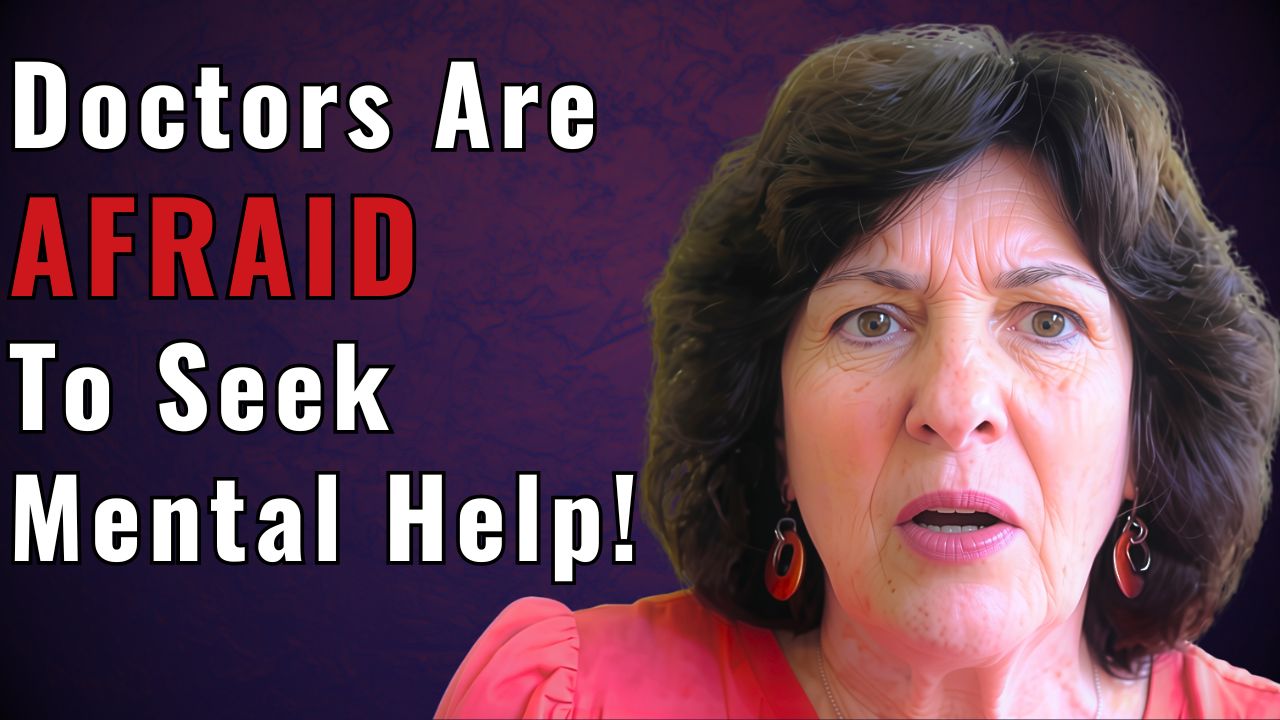
The Question That Can End a Career… or More.
There’s a line on a form that most people never think about. A checkbox, a few words, easy to skim past. For Kim Downey, that line is the reason someone is dead.
Kim didn’t start out as a physician advocate. She started out as a patient. Three cancer diagnoses in two years, a surgical complication, a vocal cord scare, radioactive iodine, and through all of it, one radiologist who got her through the worst of it with skill and with care. She thought her next visit with him would be a small celebration. A routine scan. A chance to say thank you in person.
He wasn’t there. He’d died a month earlier. By suicide.
What she learned afterward is the part that should unsettle every one of us, not just the part that breaks our hearts. Doctors, unlike physical therapists, unlike most licensed professionals, are often asked on their license renewal whether they’ve ever sought mental health support.
Not whether they’re currently able to practice safely. Whether they’ve ever sought help at all.
Dr. Lorna Breen, an ER physician who came back too soon from COVID and hit a wall no one should have to hit alone, was afraid that getting help would end everything she’d built. Days after she was discharged from care, she took her own life.
We build systems to protect people, and sometimes those same systems become the wall between a person and the help they need.
Kim said it best, ”A scalpel isn’t the instrument of healing. The doctor is the instrument. You wouldn’t walk into surgery with a rusted, dull blade and expect a clean outcome, and you can’t walk a doctor through eighty, a hundred, a hundred and twenty hours a week and expect their judgment to stay sharp.”
Somewhere along the way, medicine convinced itself that the instrument doesn’t need care, only the patient does. That’s backwards. That was always backwards.
Kim’s story doesn’t stop at grief. It becomes a mission, an organization, a podcast, multiple books, a physician retreat. But underneath all of it is one simple, stubborn belief: seeking help is not weakness, it’s strength, and the systems that make it feel dangerous are the ones that need to change, not the people caught inside them.
In this conversation, we talk about non-competes that trap doctors in bad situations even when their families are suffering. We talk about prior authorizations that override a doctor’s judgment, sometimes with fatal consequences. We talk about a healthcare system built less like a place of healing and more like a financial instrument, and what it costs when we let it stay that way.
None of this is about villains. Most people, on every side of this system, are doing their best with what they’ve been given. The problem is what they’ve been given isn’t enough, and it’s not built to protect the people it depends on most.
If you’re a doctor who’s wondered if you’re alone, if things have to be this way, or if life will ever get better, this one’s for you.
Want to hear the full conversation? It’s on the podcast now.
Follow this blog on Mastodon or the Fediverse to receive updates directly in your feed.


Leave a Reply