

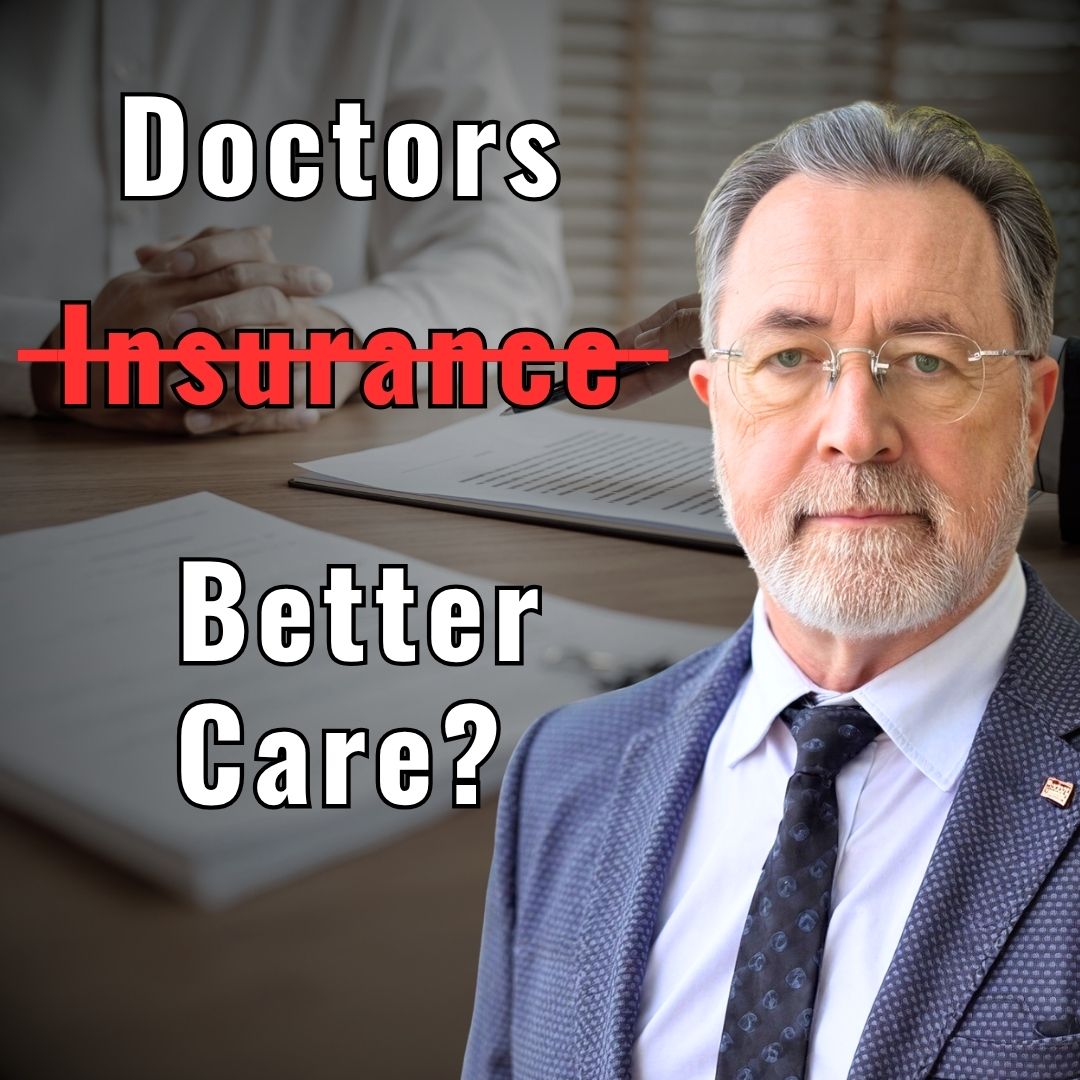
A recap of The Care We Need podcast episode with Dr. Don Railsback, CEO of Vision Care Direct
I didn’t expect to be as moved by this conversation as I was.
When I sat down with Dr. Don Railsback, I thought I was talking to an optometrist with a business idea. What I found was something closer to a reformer — a provider who got fed up with a system that was quietly suffocating the thing he loved most about medicine, and decided to build something better from the inside out.
What he built is called Vision Care Direct. And the story of how it came to be is worth hearing, because it started not with a business plan but with a table saw.
“I Got One Left. I’ll Give It to You.”
Don didn’t set out to run a vision plan company. He was a practicing optometrist, sitting on the board of an Independent Physician Association in Kansas, and when someone proposed starting a new vision plan he was the one who pushed back. He’d dealt with traditional vision plans. He knew how they worked — restrictive reimbursements, mandated frames and lenses, forced discounts on services the plan didn’t even cover. He wanted no part of another one.
Then he went out to his garage to do some woodworking and cut his fingers off with a table saw.
While he was healing, the chairman of the board called and asked if he’d lend them a hand. His response: “I got one left. I’ll give it to you.”
But he had conditions. It had to be a win for the doctors. A win for the brokers. A win for the employers. And most of all, it had to be a win for the patients. If those four things couldn’t be true at the same time, he wasn’t interested.
That’s the entire vision of Vision Care Direct, summed up in the terms of a man who’d just lost his fingers. Not a business pitch. A set of values.
The Middlemen Problem Nobody’s Talking About
Here’s what I didn’t fully understand before this conversation: most of the friction in the doctor-patient relationship isn’t coming from bad doctors or bad patients. It’s coming from the layer in between.
Don has a name for it. VBMs — vision benefit managers, now better described as vision benefit middlemen. They get between doctors and patients, add cost to the system, and add no clinical value. And right now, two or three companies hold roughly 80% of vision plan lives in the United States. That’s not a market. That’s a corner.
When you have that kind of market concentration, the contracts don’t come with negotiation. They come as mandates. Take it or leave it. And for most independent providers, leaving it isn’t a real option because leaving it means losing access to most of their patients.
So they take it. They see more patients. They cut corners — not because they want to, but because the math demands it. And somewhere in all of that volume and constraint, the thing that made them want to be a doctor in the first place starts to disappear.
Don’s mentor told him something early in his career that I haven’t been able to stop thinking about: “We don’t provide care in order to collect fees. We collect fees in order to provide care.”
That distinction is everything. And it’s exactly what the current model has reversed.
What the Eye Can Actually See
I want to pause here on something that surprised me — and probably will surprise you too if you’re thinking of optometry purely in terms of glasses and contacts.
The comprehensive eye exam is the only medical procedure that allows a clinician to view vascular systems in the body in real time, without surgery. You can see blood vessels. You can assess their health directly. Which means a comprehensive eye exam can reveal cardiovascular disease, high blood pressure, diabetes, neurological conditions, and immunosuppressive problems — often before any other symptom presents.
Don found pre-choroidal melanomas — tumors inside the eye — in multiple patients during routine exams. These patients had no symptoms. They came in for a checkup. And what was found almost certainly saved their lives, because left undetected, those tumors would eventually have metastasized.
Think about that in the context of complex illness. How many patients cycling through specialists — fatigued, foggy, struggling — have never had a comprehensive eye exam? How many signals are sitting right there, visible, waiting to be read by someone who knows what to look for?
This is what Don means when he says optometry is a frontline player in whole person health. He’s not being dramatic. He’s being precise.
The Woman Who Cancelled Two Surgeries
One of the stories Don told in this conversation is one I’ll be sharing for a long time.
During an ergonomic assessment at a company in Wichita, his team encountered a woman who was scheduled for carpal tunnel surgery and exploratory surgery on her neck and brain for chronic daily headaches and blurry vision. Her workstation was completely set up wrong — monitors too high, chair too low, keyboard mispositioned. She was spending eight hours a day in a posture that was slowly destroying her body.
They adjusted her monitor height. Lowered her keyboard. Added a footrest. Sent her to an optometrist for computer eyewear. Within three weeks, every symptom was gone.
She cancelled both surgeries.
I don’t share that story to suggest that ergonomics solves everything. I share it because it illustrates something that drives everything Tenay and I are building at Benes Companies: the right information, applied at the right moment, through the right system, changes outcomes. Sometimes dramatically. And the barrier is almost never the science — it’s the structure that either gets the right information to the right person or doesn’t.
Don is building a structure that does.
A Doctor-Led Network, Not Just a Plan
What makes Vision Care Direct more than a vision plan is the infrastructure being built around it. Don’s model is doctor-owned and doctor-operated, grown out of the Independent Physician Association model, and actively moving toward becoming a hub — a resource for independent providers across the country who need group purchasing power, business consulting, connections to their state associations, and access to the lobbying efforts that actually shape the policy environment they practice in.
He’s negotiating group savings on labs and supplies. He’s counseling providers on cost structure and internal systems. He’s helping practices survive — so they can keep practicing.
And he’s expanding. Not just geographically, but into dental care, ergonomics, wellness — anywhere the preventative, relationship-first model of care can take root.
This is what a doctor-led alternative to the insurance model actually looks like. Not a protest. A parallel system, built from the inside, by someone who refused to accept that the current way was the only way.
What This Means for Your Practice
If you’re a provider reading this — in optometry, in medicine, in any discipline where the insurance middlemen have found their way into your exam room — I want you to hear something Don said near the end of our conversation:
“There are alternatives out there. And there are better ways for us to approach healthcare that in the long run will be better for everybody.”
He’s right. And the fact that those alternatives exist, and are growing, and are being built by people with servant hearts and practical minds — that matters. Not just for providers. For every patient who deserves a doctor who has the time, the margin, and the freedom to actually take care of them.
If this conversation resonated with you, please subscribe to The Care We Need, leave a like, and share this episode with a provider or patient in your life who needs to hear it. The more people who know alternatives like this exist, the faster we can build the care we actually need.
Resources mentioned in this episode:
- Vision Care Direct — provider-centered alternative vision plan: visioncaredirect.com
- American Optometric Association — state associations and lobbying resources: aoa.org
- Heal or Die by Tenay Benes
Watch the full episode here:
Follow this blog on Mastodon or the Fediverse to receive updates directly in your feed.


Leave a Reply