

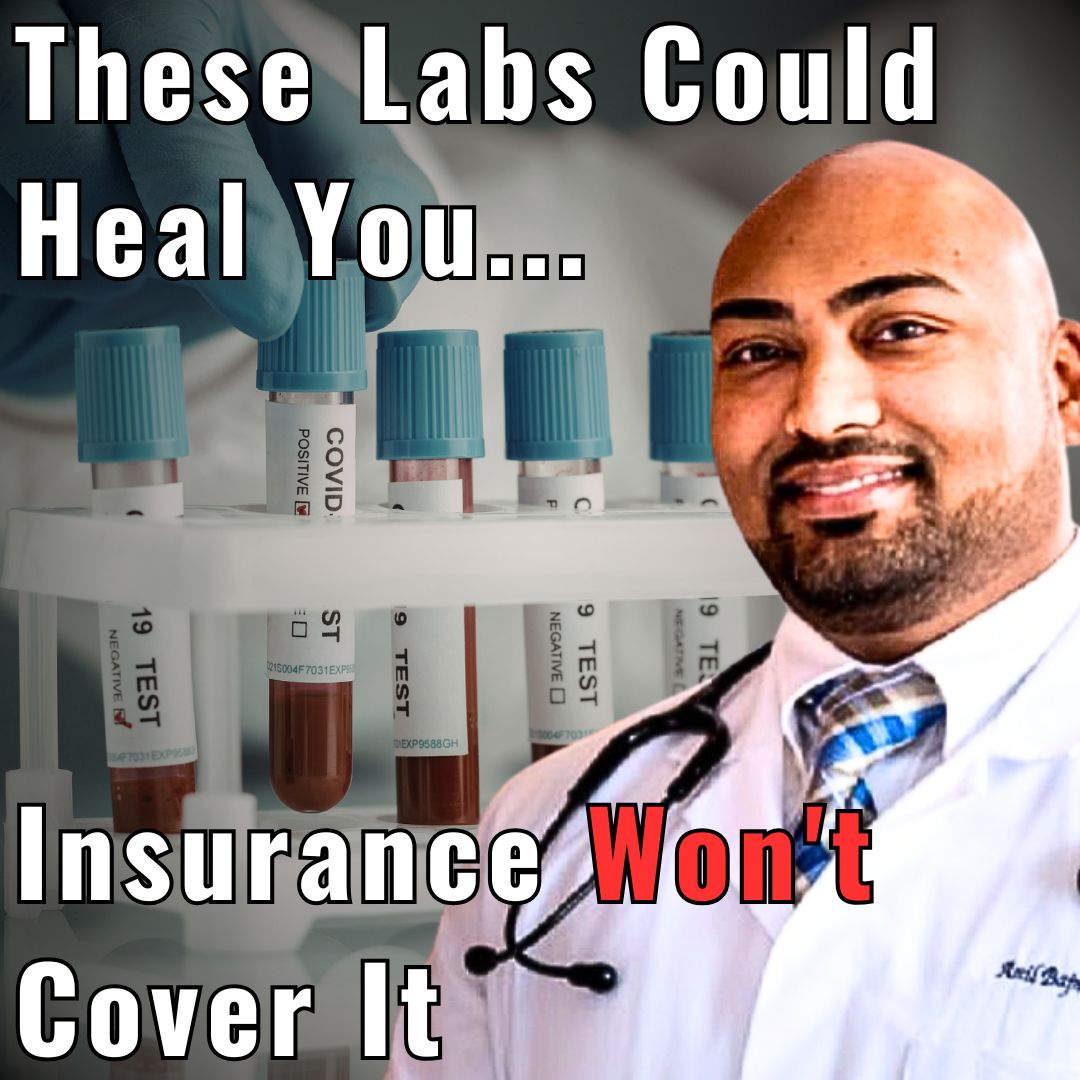
A recap of The Care We Need podcast episode with Dr. Anil Bajnath, Founding President of the American Board of Precision Medicine
I want to be honest with you about something. I sat down with Dr. Anil Bajnath knowing I was going to be in over my head. Molecular diagnostics, multi-omics, transcriptomics, proteomics — this is not my world. I’m a communicator, not a clinician.
But about twenty minutes into this conversation, I stopped worrying about the vocabulary and started paying attention to what he was actually saying. Because what he was saying was simple, even when the science behind it wasn’t: the system you’re working inside is not designed to find what’s actually making your patients sick. And there is a better way.
If you treat complex illness — or if you’re a patient who has been told your labs are normal while you keep getting sicker — this one is for you.
“Your DNA Is Not Your Destiny”
That is how Dr. Bajnath opens the conversation around precision medicine. And it is worth pausing there, because it cuts against something most of us have absorbed without realizing it — the idea that biology is fate.
It isn’t. The NIH defines precision medicine as the interface of biology, lifestyle, and environment. DNA is the foundation — your book of life, as Dr. Bajnath puts it — but it is not the whole story. Those lifestyle and environmental factors are co-authors. They determine which genes get expressed, which get suppressed, and what your body actually does with the blueprint it was given.
That distinction is everything. Because it means the question is never just what genes does this person have. The question is what has this person been exposed to, and how is that exposure talking to their biology right now.
What Standard Labs Are Missing
Here is the part of this conversation that I think every provider needs to sit with.
Standard laboratory profiles, Dr. Bajnath says, give you a good clinical representation — but they give you the 360 view of what’s influencing that biochemical expression. And the timing problem is brutal: “the laboratory testing will be normal until it’s not. You’re not diabetic until you are.”
All those preceding insults. All that accumulative exposure. It is already happening in the body before the standard markers move. Which means by the time the labs finally flag something, a lot of damage has already been done.
Precision medicine, as Dr. Bajnath practices it, is about getting upstream of that. It is about building what he calls a biological audit — blood, urine, saliva, stool, genetics, microbiome, environmental exposures — and using that comprehensive picture to reverse engineer where to look before the crisis arrives.
The Three Things Most Providers Aren’t Asking About
When I asked Dr. Bajnath what questions providers should start incorporating into their intake to move toward a more holistic picture, he named three categories without hesitation — and called all three “very underrepresented in most conventional circles.”
Trauma. Open-ended, not presumptuous. Just — has there been trauma, and what form did it take? Because when he runs transcriptomic profiles on his sicker patients, he is looking at FKBP5 gene upregulation — what he describes as a trauma gene. When that is elevated alongside inflammatory markers and environmental toxic burden, he knows exactly what kind of complexity he is dealing with. The trauma is not a footnote. It is part of the molecular picture.
Infectious agent exposure. Not just Lyme — though he is clear that chronic Lyme and post-Lyme syndrome remain dramatically underdiagnosed. Babesia, Bartonella, Ehrlichia, Anaplasmosis. Patients may not remember a tick bite. The nits are too small to detect. These agents persist, and they interact with everything else going on in the immune system in ways that standard labs will not catch.
Biotoxin exposure — specifically mold. This is where Dr. Bajnath spent the most time, and for good reason. He trained with Dr. Andrew Heyman at George Washington University on Chronic Inflammatory Response Syndrome — CIRS — which affects individuals with a specific HLA genetic type. When those individuals are exposed to biotoxins from water-damaged buildings, they trigger a chronic, multi-system inflammatory response that presents as fatigue, brain fog, headaches, dizziness, dysautonomia, digestive issues, skin issues, cardiopulmonary symptoms. This, he says, is the mystery illness person. And over 50% of buildings in the United States have water damage.
His point is not that every chronic illness patient has all three of these. His point is that none of these three are being systematically screened for in conventional medicine — and that is costing people years of their lives.
A 45-Page Intake and a Box of Tests
One of the things I found most practically useful in this conversation was hearing how Dr. Bajnath actually runs his practice — because it is a model worth understanding even if you cannot replicate it wholesale.
His intake is 45 to 50 pages. It covers early childhood exposures, birth method, breastfeeding history, antibiotic use, foreign travel, infectious agent history, environmental exposures, dental factors, sleep. Everything that has shaped the biological story the patient is living in. And it is all done before the first appointment — sent ahead of time, on the patient’s schedule, so that when they sit down together, the conversation can be focused and strategic rather than foundational and rushed.
Alongside the intake, he sends a kit. Blood, urine, saliva, stool, genetics — everything collected at home, in advance. And while the results are processing, he gives patients access to an educational e-course so they understand what their data means before they review it with him. By the time they meet, they are already literate in their own biology.
He calls the heuristic behind this GOTOIT — Gather, Organize, Tell, Order, Initiate, Track. It is a functional medicine framework, and it is not just clinical philosophy. It is workflow design. It respects everyone’s time. And it is the model he argues every practice should be moving toward, even if the path there looks different depending on your structure and constraints.
The System Problem — Named Plainly
I want to quote Dr. Bajnath directly here, because he said it better than I can paraphrase it:
“Industry is outpacing clinical adoption.”
The science exists. The testing exists. The diagnostic technology is available right now to build the kind of molecular picture he is describing. Illumina — one of the major manufacturers of DNA testing equipment — has built machines that can produce genomic, epigenetic, transcriptomic, and proteomic profiles from a single sample. A process that used to require a building now fits on a desktop.
The bottleneck is not the science. It is the adoption. It is insurance coverage, institutional inertia, the 15-minute appointment model, and a reimbursement structure that was never designed for this level of personalized care.
He is direct about the insurance piece too: “Why won’t you cover my Vitamin D? Why aren’t we looking at red blood cell magnesium? Do you know how many people are profoundly deficient in magnesium?” These are not exotic tests. They are simple, inexpensive, and routinely denied. The gap between what is possible and what is covered is not a gap of science. It is a gap of priority.
What Providers Can Actually Do
I pressed Dr. Bajnath on this — because inspiration without a path forward is not useful. If you are a provider in a conventional setting, operating under real constraints, what can you actually do?
His answer was a three-step progression, and it was more practical than I expected.
Step one: Get educated. The American Board of Precision Medicine is enrolling its first certification cohort now. The curriculum runs three tiers — multi-omics, advanced diagnostics, and systems biology applied to clinical specialties. This is where to start if you are serious about making this shift.
Step two: Explore the direct primary care model. Fewer patients. More time. A membership fee structure that gives you the margin to actually practice precision medicine rather than just aspire to it. He acknowledges this is not for everyone and is not always immediately feasible — but the DPC model is growing precisely because providers are reaching the limits of what is possible inside the volume-based system.
Step three: Determine your business model accordingly. He is honest that this is the conversation most providers avoid. But the volume-based model and precision medicine are structurally incompatible at scale. The path forward requires getting clear about what you are actually trying to build — and then designing the business around that rather than squeezing the medicine into whatever the system will reimburse.
For those not yet ready to make a full structural shift, he offered one more practical tool: the group visit model. One hour. Fifteen to fifty patients, triaged and educated together on lifestyle factors, emerging technologies, disease management strategies. Reimbursable. Community-building. He described it as spending one hour helping many versus one hour helping four. For providers working inside systems that are not ready to change, this is a bridge worth building.
On AI and What’s Actually HIPAA-Compliant
One moment from this conversation I was not expecting: Dr. Bajnath’s clear-eyed take on AI in clinical practice.
Multi-omics generates a minimum of three molecular layers and 5,000 data points per patient. No single clinician can process that manually at scale — and Dr. Bajnath is honest that he used to try. Now he is using AI aggregation tools to identify patterns and prioritize therapeutic directions. He is collaborating with a company called Dia to do this clinically, and he was candid that it has changed what is possible in his practice.
For providers thinking about integrating AI, his guidance was direct: do not put patient data into ChatGPT. Instead, look at HIPAA-compliant clinical tools like Open Evidence — an AI platform built specifically for physicians that processes clinical scenarios and research without exposing patient data. It is already in use across the field and it is where he pointed providers who are ready to start.
His broader vision for AI is not about replacing clinical judgment. It is about AI copilots and digital twinning that aggregate symptoms, biology, and history ahead of the encounter — so the doctor walks in already knowing where to look. The doctor still thinks. The doctor still decides. But the front-loaded work is done.
Why This Keeps Coming Back to the Same Thing
Tenay has lived inside this gap for over a decade. Visiting provider after provider, each focused on their piece of the picture, none of them equipped or empowered to hold the whole thing together. It is the experience that shaped her memoir, Heal or Die, and it is the experience that drives everything we are building at Benes Companies and The Care We Need.
What Dr. Bajnath is doing — building a practice around the biological audit, training the next generation of precision medicine clinicians, making the case for P4 medicine at the policy and education level — is exactly the kind of work that changes what is available to the next patient who walks into a clinic looking for answers.
The science is ready. The tools are available. The question now is who is willing to close the gap between what is possible and what is practiced.
“Industry is outpacing clinical adoption.”
That is both the problem and the invitation.
Watch the full episode on The Care We Need. Links below.
Resources mentioned in this episode:
- American Board of Precision Medicine — certification program: abprecisionmedicine.org
- Institute for Human Optimization — Dr. Bajnath’s practice: ifho.org
- Open Evidence — HIPAA-compliant clinical AI: openevidence.com
- The Longevity Equation by Dr. Anil Bajnath
- Heal or Die by Tenay Benes
If this conversation moved you, please subscribe to The Care We Need, leave a like, and share this episode with a provider or patient in your life who needs to hear it.
Watch the full episode here:
Follow this blog on Mastodon or the Fediverse to receive updates directly in your feed.


Leave a Reply