

Hi! Tenay here.
I wanted to share some of the feedback we’ve received from people about the features we’ve developed on The Care We Need Website for Clients — what we call people navigating complex illnesses. I’m sharing because I want you to know what we’re doing to make sure we get the Client experience right, because people don’t need more health tech, they need better health tech.
Which user test did we choose?
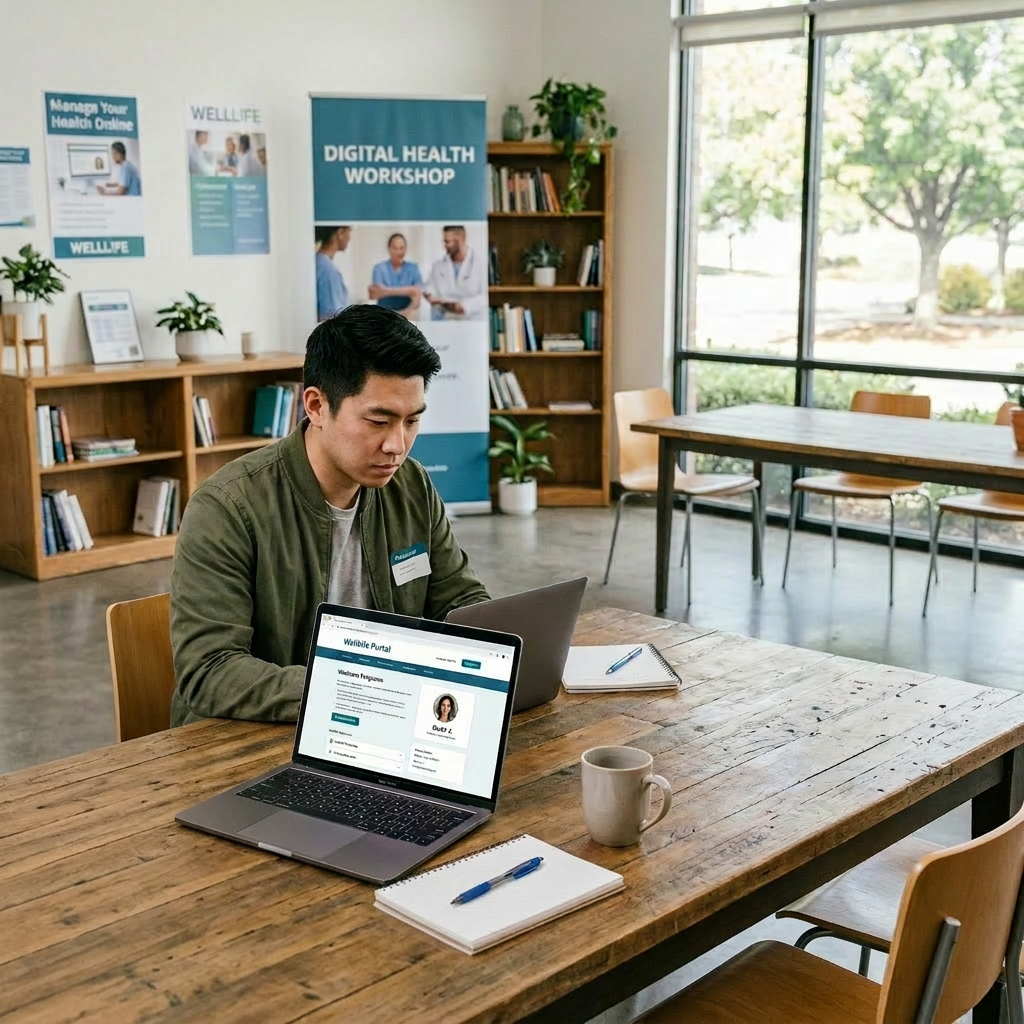
Over the past couple of weeks, I sat down with four real people — not developers, not investors, not people who owe me anything — and asked them to experience my website for the first time while talking out loud. The technical term for what we did is a “cognitive/affective jog-through” but that’s only for the information scientists in the room.
There are many other ways to do user tests — including A/B testing, task-success rate, and card sorting — so that developers can get feedback from potential or real users about how helpful their website is, but I chose the cognitive-affective jog-through because I want to know what my website makes people think and feel.
Here’s what happened.
Who participated in Client user tests?
All four testers were between 31 and 50 years old, married & parenting kids at home; one was also a grandparent. Three out of four are living with a disability or chronic condition themselves — a mental health condition, a physical health-related disability, or ADHD with a learning disability. One tester had no personal diagnosis but brought deep personal experience in health and wellness.
They were two women and two men; two African-American, one Hispanic/Lantinx, and one European-American; incomes ranging from $13,000 to $170,000; education ranging from bachelor to master to professional degree; from zip codes ranging from the 00000s to the 90000s (across the entire country)
Two testers were personal friends while two were new acquaintances.
What did Client users love?
The website’s color scheme came up in almost every session — warm, calming, non-clinical.
The phrase on the homepage, “You don’t need to have a diagnosis to connect with the right professionals… All you need to know is where it hurts” stopped people. Two testers called it out specifically and said it needed to be bigger, more front and center.
The Health Timeline was the runaway favorite feature. Multiple testers used words like “amazing” and “the most useful health history tool I’ve ever seen.” One tester left a written review that said:
“FINALLY, I don’t have to retell my entire life story to every new healthcare professional I encounter! The healthcare timeline tells my story for me. This is the healthcare search tool I’ve been waiting for!!”
~ Client User Tester
That’s the whole point. That’s why this exists. Hearing it reflected back was something.
The AI-assisted search also generated real enthusiasm — specifically its ability to bridge everyday language to clinical terminology. When someone types in their symptom “tired all the time” and the website translates that to “chronic fatigue” or “insomnia” after asking a few clarifying questions, that’s doing something Google can’t do for you in a healthcare context. Two testers called this out as the moment the platform felt genuinely different. One tester left a written review about it:
“I [can save] …so much time using The Care We Need to find providers for my whole family. No more running around trying to find a pediatrician who is ACTUALLY accepting new patients, takes my insurance, and is the right fit for my kids!”
~ Client User Tester
What did Client users say needs work?
This was the most valuable part of testing for me: finding out what doesn’t work and how I can fix it.
The AI-Assisted Search, when it worked, impressed people — but one tester noted it was “parroting” input more than it was reframing it. That’s a fair critique and I can put some more bounds on how the Gemini Large Language Model (LLM) interacts with our Clients.
Two testers expected a notification bell on the dashboard and noticed immediately when it wasn’t there. One tester flagged that surfacing search history on the main dashboard could feel triggering for someone navigating sensitive health history. Both of those observations will get addressed.
On the Health Timeline specifically — testers loved the feature but found the categorization system confusing. They didn’t understand why they were being asked to categorize their own health events by the Seven-Part Person (spiritual, psychological, physiological, environmental, capital, social, and influential health) until it was explained that categories control which Professional users can see which events on a Client Profile. Once they understood, they saw the value it, but that logic needs to be visible in the User Interface (UI), not explained verbally in a testing session.
What did Client users say they’d pay?
I asked them what they would pay for the live and future features they saw. Here’s what they said:
Nobody wanted to pay per search. Three out of four either rejected the model outright or couldn’t put a number on it. Got it.
For a monthly subscription, two testers independently landed on $20 without prompting. One went higher, one went lower. The cluster at $15–$20/month feels like the honest range for this group.
Every single tester said they’d be very likely to hire a care professional who offered this platform as part of their services. That’s what sounds the most valuable insight for me. The path to Client users may run directly through Professional users.
Were there any patterns in the Client user feedback?
The testers who had the deepest personal experience navigating complex health systems — multiple conditions, multiple providers, years of retelling the same story in different waiting rooms — were the most emotionally activated by the Health Timeline. They were also the most insistent on granular data controls. They wanted to decide exactly who sees what, and when.
Those same testers were the most enthusiastic reviewers. And they’ll be the first to leave if we get the data piece wrong.
More updates coming as we build. If you want to be part of the next round of testing, reach out at contact@benescompanies.com!

Leave a Reply